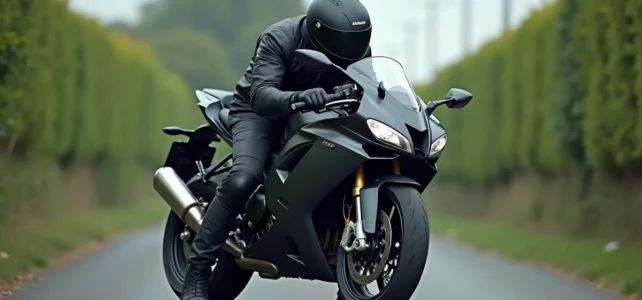
The motorcycle news of mid-2026 is structured around three measurable axes: regulatory changes (stricter technical inspections, limited-duration licenses), manufacturer innovations in the trail segment, and the rise of atypical engines. What concrete gaps separate these trends in terms of impact for French motorcyclists?
Motorcycle Regulation 2026: Technical Inspection, Digital License, and ZSB Compared
Three regulatory measures converge this year, but their timelines and consequences differ significantly. The table below summarizes the available data.
You may also like : The latest wellness trends and tips to follow for a balanced life
| Measure | Effective Date | Who is Affected | Main Impact |
|---|---|---|---|
| Stricter motorcycle technical inspection | 2026 (enhanced noise and safety criteria) | Owners of modified motorcycles (exhaust, lighting) | Used market, maintenance costs |
| End of the “lifetime” motorcycle license | By 2028 (European directive) | All motorcycle license holders | Validity limited to 15 years, health examination, digital license |
| Zones with Enhanced Security for Two-Wheelers (ZSB) | Under discussion | Motorcyclists riding in urban areas | Traffic restrictions, even for homologated motorcycles |
The tightening of technical inspections, reported by Mobilians, primarily targets non-compliant modifications. For motorcyclists riding with an aftermarket exhaust or non-homologated LED lighting, compliance becomes a budget item to anticipate now.
Specialized publications like moteurmag.com closely follow these developments, and it is on such topics that regulatory monitoring makes the difference between a smooth purchase and an unpleasant surprise at inspection.
See also : The latest unusual and entertaining news not to be missed today
On the other hand, the ZSB project remains in the discussion stage. The idea of banning motorcycles in cities, including those that are perfectly homologated, faces strong opposition from motorcyclist federations. The gap between technical inspection (a confirmed measure) and ZSB (a political hypothesis) is worth noting: one imposes immediate adaptation, while the other remains a signal to watch.

400 cc Trails and Atypical Engines: Motorcycle Innovations That Change the Game
The trail segment is experiencing notable renewal with the arrival of several models in the 400-450 cc category. This intermediate displacement, long neglected by manufacturers, meets a concrete demand: versatile motorcycles, accessible to A2 licenses, and sufficiently capable off-road to exceed simple road use.
Moto Magazine dedicates a comparison to these trails, noting that they “will surprise.” The pricing position and the road/off-road versatility of these machines make them a relevant choice for motorcyclists who want to start off-roading without investing in a dedicated motorcycle.
Non-Standard Engines: The Veloce Aperion Case
At the other end of the spectrum, the Veloce Aperion illustrates a marginal but technically significant trend. This project is based on a 280 hp two-stroke 8-cylinder, an architecture that anti-pollution standards had almost made disappear. Its mere existence in 2026 raises a real technical question about the viability of two-stroke engines in the face of European regulations.
These two trends, accessible trails and extreme engines, show that the motorcycle market is not limited to a race towards electric downsizing. Manufacturers are simultaneously exploring both sobriety and raw performance.
European Motorcycle License: What Changes with the 15-Year Validity
The upcoming European directive profoundly alters the logic of the motorcycle license. Three structural changes deserve careful reading:
- Validity reduced to 15 years (compared to an unlimited duration today), with the possibility for some states to shorten it to 10 years if the license serves as an identity document
- Mandatory health examination before issuance, and self-assessment forms during renewal
- Generalization of the digital driving license, integrated into the European identity wallet
For French motorcyclists, the shift from a permanent title to a renewable document represents a paradigm shift. The question of the health examination, in particular, raises concerns about the medical criteria used and their impact on senior drivers.
The announced timeline (“by 2028”) allows for a transposition period for member states. Unlike the motorcycle technical inspection already in effect, this license reform remains a moving target whose practical modalities are not yet fixed.
Motorcycle Tests and Equipment: Where the Added Value Lies in 2026
Long-term tests remain the most reliable format for evaluating equipment. Moto-Net.Com, for example, publishes a report after ten months of using the Spidi Hard Track 3 textile set, a period that allows for measuring the actual resistance of seams, the effectiveness of waterproofing after several washes, and comfort across different seasons.
On the tire side, the Metzeler Roadtec 02 M is the subject of a video test one year after its launch. This type of feedback allows for verifying whether the promises of Sport GT versatility hold up over time, beyond initial impressions on dry track.
Motorcycle Intercom: An Expanding Market Under 230 Euros
The range of motorcycle intercoms is expanding in an accessible price range. The question is no longer whether to equip oneself, but whether entry-level models offer sufficient audio quality and range for daily use. Recent comparative tests show that several intercoms under 230 euros meet common needs (GPS, calls, passenger conversation) without major compromises on sound clarity.

The motorcycle news of 2026 is read through its regulatory data more than through its marketing slogans. The stricter technical inspection is already a reality for modified motorcycles. The European license reform will arrive in the next two years. On the product side, the 400 cc trail segment and long-term equipment tests offer the most concrete benchmarks for guiding a purchase or preparing for a season.