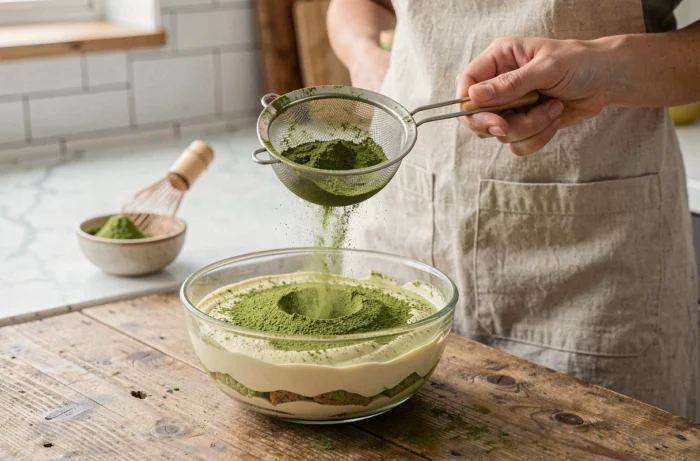
Christophe Michalak’s matcha tiramisu is based on a technical principle that is uncommon in French pastry: instead of whipping the egg whites and cream separately, all the ingredients are mixed and then whipped together with a mixer. This method produces a distinct airy texture compared to classic Italian tiramisu, and it is precisely this base that lends itself well to customization.
Matcha cream structure: understand before modifying
In a traditional tiramisu, firmness comes from the whipped egg whites and cream, incorporated in two stages. The Michalak version eliminates this separation. The mascarpone, egg yolks, sugar, and liquid cream are whipped together until a homogeneous fluffy mixture is achieved.
This technique has a direct consequence on customization: any addition alters the stability of the whole. A fruit coulis that is too liquid, an excess of alcohol, or an absorbent powder like unsifted cocoa can break the emulsion or weigh down the mousse.
To incorporate a new ingredient into the cream, two simple rules apply. First, any liquid element (vanilla extract, yuzu syrup, orange blossom water) must be added before whipping the mixture, never after. Second, any dry powder (additional matcha, hazelnut powder, spices) should be sifted and gently folded in with a spatula once the desired volume is reached.
Before adapting Michalak’s matcha tiramisu recipe, it’s best to make it once as is to feel the reference consistency. Without this benchmark, it is difficult to judge whether a modification has worked or degraded the result.
Quality and dosage of matcha in a dessert: common pitfalls
Matcha is not just a simple green coloring. Depending on its quality, it brings a more or less pronounced vegetal bitterness, umami notes, and a color that ranges from dull green to bright green. A culinary grade matcha is sufficient for the cream, but the final dusting gains flavor with a higher grade.
The dosage deserves special attention. A bowl of matcha prepared with about 2 g of powder contains roughly as much caffeine as an espresso. In a tiramisu, the powder appears at several levels: in the cream, in the soaking syrup, and as decoration. The accumulation can represent a significant amount of caffeine per serving.
For those sensitive to caffeine or if the dessert is served in the evening, reducing the matcha in the soaking syrup while keeping it in the cream allows for maintaining the flavor without excessive stimulating effects. Replacing the matcha syrup with a simple light sugar syrup or cooled sencha green tea infusion is an alternative that preserves the aromatic consistency.
Customizing the soaking syrup for the biscuits
The soaking syrup is the most accessible lever for customization. In the basic recipe, the ladyfingers soak in a mixture of hot water, matcha, and sugar. This step determines the moisture of the assembly and the sweet-bitter balance.
Aromatic variations that work with matcha
- Yuzu syrup: the acidic citrus flavor contrasts with the vegetal bitterness of matcha. Dilute yuzu juice in the base syrup to a quarter of the total volume, no more to avoid the acidity causing the mascarpone to curdle upon contact.
- Black sesame syrup: lightly toast black sesame paste, then dilute it in the warm syrup. The result gives a toasted note reminiscent of Japanese pastries like kurogoma.
- Coconut milk syrup: replace half of the water with unsweetened coconut milk. The fat from the coconut slows absorption by the biscuit, so soak the biscuits for a few seconds longer than usual.
The trend of “matchamisu,” popularized on social media since 2024, specifically focuses on biscuits that are barely soaked to allow the matcha to dominate the palate. This approach works particularly well in individual verrines, where each layer remains visible.
Replacing ladyfingers: alternatives and consequences on the assembly
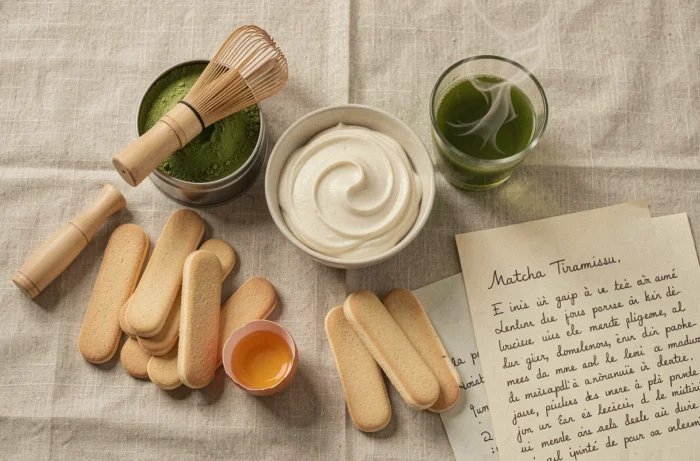
Ladyfingers absorb the syrup without disintegrating thanks to their aerated structure. Replacing them radically changes the texture of the dessert.
Crumbling speculoos into a thin layer adds a spicy crunch, but they absorb almost no liquid. The assembly becomes drier and more compact. It is then necessary to slightly increase the amount of cream to compensate.
Feuilletine (like gavotte) creates a delicate layering between the cream layers. They soften quickly: the tiramisu should rest for less time in the refrigerator, two hours instead of an entire night.
A sponge cake cut into thin slices behaves most similarly to ladyfingers in terms of absorption. Matcha sponge cake (by adding powder directly into the batter) doubles the intensity of green tea in the final dessert.
Plating in verrines and storage
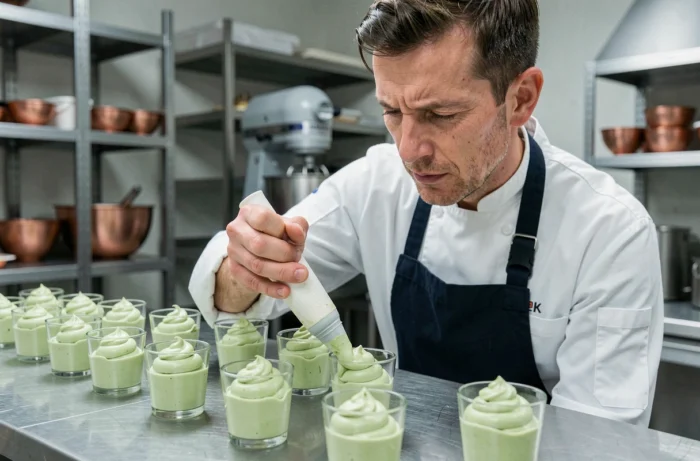
Plating in individual verrines allows for playing with visible layers and facilitates serving. Alternating matcha cream, soaked biscuit, and a contrasting element (passion fruit coulis, white chocolate flakes) makes each portion self-contained.
For storage, a matcha tiramisu loses its vibrant color after about 24 hours in the refrigerator. The dusting of matcha should always be done at the last moment, just before serving. Powder exposed to the humidity of the fridge turns brown and develops a flat bitterness.
A tiramisu assembled the day before and dusted at the last minute retains all its visual and taste freshness. This constraint applies to all variations, regardless of the customization chosen for the cream or soaking.