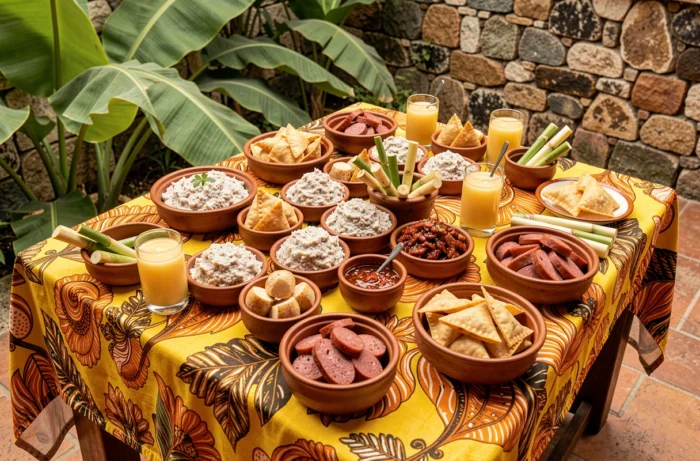
A successful Creole dinner aperitif is not just about lining up accras on a platter. Building a coherent assortment requires mixing textures, managing allergens, and offering bites that can hold at room temperature without losing their shape. Here, we detail the technical choices that make the difference between a friendly buffet and a haphazard one.
Allergens and Creole Buffet: The Regulatory Framework Most Articles Overlook
As soon as a dinner aperitif is served by a caterer or in a collective setting, the 14 regulatory allergens must be indicated in writing, in a legible and accessible manner, before the order is placed. A simple verbal response is not sufficient. This obligation stems from European Regulation (EU) No. 1169/2011 and French Decree No. 2015-447 of April 17, 2015.
The concrete problem with a Creole buffet is the density of allergens in preparations that seem simple. Gluten is found in the dough of samoussas and accras. Shellfish are present in crab or shrimp preparations. Fish is the very basis of cod accras. Sesame appears in some seasonings without guests suspecting it.
We recommend preparing a simple chart, placed next to each dish, that lists the allergens present. It is a legal obligation, but it is also a welcoming gesture that avoids unpleasant surprises during an aperitif among friends or colleagues.

Creole Recipes Without Frying: Building an Inclusive Dinner Aperitif
Search results for Creole aperitif revolve around the same recipes: accras, bouchons, fried samoussas. By focusing on these dinner aperitif ideas on TwimmCook, we see that Creole cuisine offers a much broader repertoire, adapted to contemporary dietary constraints.
A truly friendly assortment includes vegetarian bites and options without seafood. Several Creole preparations lend themselves naturally to this:
- Bonbons piment: made from split peas, naturally gluten-free and without animal products if the egg is omitted, they add spice and a dense texture that holds well on a platter
- Vegetable achards (chayote, palm cabbage, green mango): prepared the day before, they gain in flavor and require no last-minute cooking
- Raw vegetables served with homemade rougail tomato: the rougail is a great substitute for industrial dips and pairs well with sticks of cucumber, carrot, or raw chayote
- Pan-fried plantain slices (not fried): cooking in a pan with a drizzle of coconut oil gives a crispy surface and a melting heart, without deep frying
This type of assortment allows for covering multiple dietary profiles without multiplying recipes. Each bite must be explicitly identified on the buffet to comply with the obligation to inform about allergens.
Creole Sauces and Pairings for an Original Dinner Aperitif
The sauce makes the difference between a Creole buffet and a generic exotic buffet. Three sauces cover almost all the necessary pairings for a dinner aperitif.
Sauce chien: The Versatile Base
Country onions, parsley, garlic, chili, lime, and oil. Sauce chien is prepared cold and pairs well with both fish and grilled vegetables. Its freshness makes it the ideal binder between hot and cold bites on the buffet. We systematically prepare it an hour before serving to let the flavors infuse.
Rougail Tomato for Vegetable Bites
Crushed tomatoes, onion, fresh ginger, chili, and a splash of lemon. The rougail stands out from classic tomato sauces due to the ginger, which gives it a specific aromatic depth. It serves as a dipping sauce for bonbons piment and raw vegetables.
Spiced Coconut Milk as a Warm Dip
A dip made from reduced coconut milk with turmeric and mild chili provides a creamy alternative without dairy. It pairs well with bites made from plantains or sweet potatoes. The reduction must be monitored: too liquid, the dip runs off the platter; too thick, the texture becomes pasty.

Homemade Arranged Rum: The Rules for a Creole Aperitif Without Missteps
A Creole dinner aperitif without arranged rum loses part of its identity. Maceration requires a minimum of preparation in advance. A homemade arranged rum needs several weeks of resting for the flavors to develop properly. Preparing arranged rum the day before a dinner aperitif is a common mistake: the result will be alcoholic and lacking depth.
Classic combinations (vanilla-pineapple, ginger-lime, passion fruit) work because they balance sweetness and acidity. The choice of base rum matters: white agricultural rum brings herbal notes that pair better with fresh fruits than molasses rum, which is rounder but less expressive.
For serving, we recommend offering arranged rum in small measured verrines rather than self-service. This allows for controlling the quantities and pairing each tasting with a savory bite, in the tradition of Caribbean food-rum pairings.
Timing Management for a Creole Buffet That Lasts
A dinner aperitif generally lasts longer than a classic aperitif. Creole bites must withstand prolonged exposure at room temperature.
Accras and samoussas, served hot, lose their crispness in less than half an hour. It is better to prepare them in small successive batches rather than taking everything out at once. The achards, rougail, and raw vegetables benefit from being taken out in advance.
Alternating hot bites in staggered service and cold bites in free access is the best organization for a buffet that remains appetizing over time. Citrus-based sauces (sauce chien, rougail) keep better than coconut milk preparations, which should be refrigerated after an hour of service.
The choice of containers also plays a role: wooden boards or banana leaves maintain the Creole aesthetic while slightly insulating the bites from the heat of the platter. A detail that may seem secondary, but which preserves textures throughout the evening.