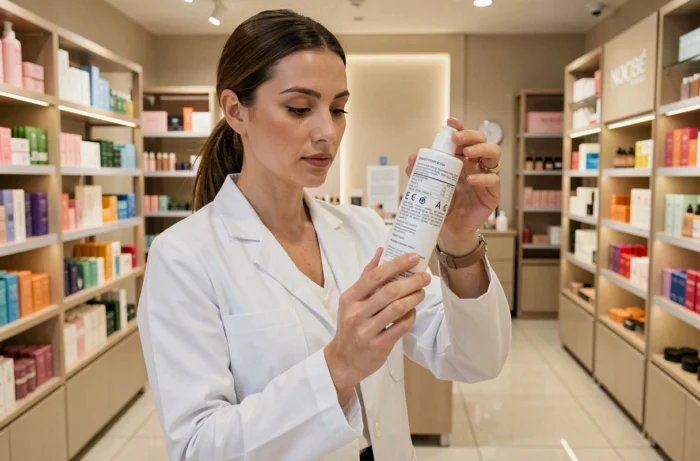
Nocibé features several hundred brands of makeup, skincare, and fragrance. Among them, some display a cruelty-free or vegan commitment, while others do not. This coexistence on the shelves raises a specific question: what can we deduce from the presence of a cruelty-free product at Nocibé regarding the overall policy of the retailer?
Cruelty-free and vegan at Nocibé: two labels, two realities
On the product pages of the Nocibé website, two labels coexist without necessarily overlapping. A product labeled “vegan” guarantees the absence of animal-derived ingredients in its formulation. A product labeled “cruelty-free” refers to the absence of animal testing, according to the criteria defined by the brand itself.
Deborah Milano and Makeup Revolution, for example, are presented as both vegan and cruelty-free on the retailer’s website. The Ordinary is also listed with similar claims. However, these commitments are made by each brand individually, not by Nocibé as a distributor.
An article detailing Nocibé’s animal policy helps clarify this distinction between brand commitment and retailer commitment. The shortcut of considering that shopping at Nocibé equates to purchasing cruelty-free does not hold up against the diversity of the catalog.
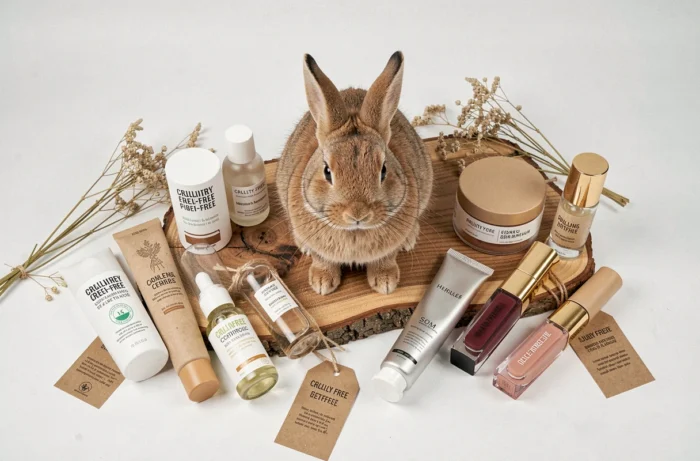
Comparative table: commitments by brand sold at Nocibé
The claims displayed vary from one brand to another. The table below summarizes the information available on Nocibé’s product pages for a few representative brands.
| Brand | Cruelty-free mention | Vegan mention | Identifiable external certification |
|---|---|---|---|
| Deborah Milano | Yes | Yes | Not specified on the Nocibé page |
| Makeup Revolution | Yes | Yes | Not specified on the Nocibé page |
| The Ordinary | Yes | Variable depending on the product | Not specified on the Nocibé page |
| Classic perfumery brands (major houses) | Not displayed | Not displayed | Not applicable |
What stands out from this table: the cruelty-free mentions are concentrated on certain brands, primarily in makeup. The major perfumery houses available at Nocibé generally do not display these claims on their pages.
European regulation and limits of in-store claims
Since 2013, the European Union has completely banned animal testing for cosmetic products. This ban covers both the finished product and the ingredients used exclusively in cosmetics. All products sold on the European market, including those distributed by Nocibé, are therefore subject to this rule.
Private labels such as “Cruelty Free” can, however, be used if they meet specifications that go beyond legislation. These specifications generally examine the entire supply chain, including ingredient suppliers and markets outside the European Union.
Why selling in China changes the game
Some brands marketed in mainland China were until recently subject to mandatory animal testing to access the market. This regulatory requirement has evolved in recent years, but the situation remains heterogeneous depending on product categories (imported cosmetics, special cosmetics, ordinary cosmetics).
For a brand present at Nocibé and simultaneously distributed in China, the absence of testing in Europe does not guarantee the absence of testing worldwide. It is precisely this nuance that the most demanding cruelty-free labels seek to cover.

Checking the commitments of a brand sold at Nocibé: concrete criteria
The claims on a product page are not always sufficient. Here are the elements to verify before considering that a product purchased at Nocibé meets your ethical criteria:
- The presence of a recognized external certification (Leaping Bunny, PETA Beauty Without Bunnies) on the brand’s official website, not just on the Nocibé page
- The brand’s policy regarding sales in markets where animal testing may be required by local regulations
- The distinction between “vegan formula” (composition) and “cruelty-free” (development and marketing process), two independent guarantees
- The consistency of the commitment across the entire brand range, as some references may be vegan without the entire catalog being so
The ethical claims displayed on product pages are heterogeneous and must be verified brand by brand. Nocibé plays a role as a distributor: the retailer highlights the claims declared by its suppliers, without constituting itself a certification body.
What the evolution of the Nocibé catalog indicates
The vegan and cruelty-free offering is visibly progressing in the makeup and skincare categories. Nocibé highlights these products in its online merchandising, with dedicated filters and seasonal promotions. This evolution reflects a growing consumer demand for cruelty-free cosmetics.
This commercial dynamic should not be confused with a formalized retailer policy covering the entire catalog. Nocibé selects and references, but each brand remains responsible for its own commitments regarding testing and composition.
The European regulatory framework has guaranteed a minimal baseline since 2013. Beyond this baseline, the responsibility for verification lies with the consumer, who must distinguish between what falls under common law, private labels, and simple marketing statements on a product page.