
The transformation of a house is not just about repainting a wall or changing a light fixture. The most cost-effective levers combine thermal comfort gains, optimization of existing square meters, and the choice of materials that can be implemented through partial self-renovation. Here, we detail the interventions that produce a measurable effect on daily life and on the value of the property.
Light insulation and ventilation: the invisible works that transform comfort
An interior can appear renovated without the thermal comfort having changed by a degree. We observe that targeted energy renovations outperform any cosmetic makeover in terms of real impact. Three actions radically change the perception of a house: insulating lost attics by blowing in cellulose or mineral wool, replacing a single-flow VMC with a double-flow VMC, and insulating pipes in unheated spaces.
Further reading : Discover the latest trends to explore fashion and reveal your style
These interventions do not require heavy construction work. Blowing cellulose or mineral wool into lost attics can be done in just a few hours. The savings on heating bills are often the most significant of all renovation expenses.
A pellet stove in addition to the existing heating system is another powerful lever. It reduces dependence on a single energy source and provides noticeable warmth within minutes. Before any decorative considerations, we recommend addressing the thermal envelope and indoor air quality, as these factors condition the comfort of all downstream rooms.
You may also like : The best leisure ideas to discover for a daily escape
To explore the various options for transforming a home, you can visit the Startup Café website, which lists complementary approaches on the subject.
Selective self-renovation: knowing what to do yourself and what to delegate
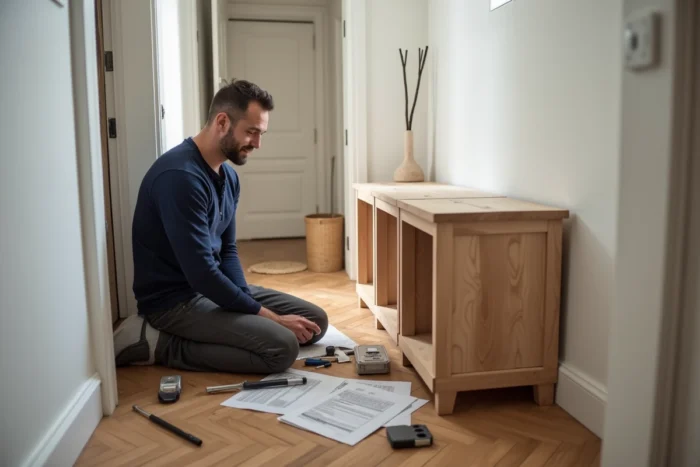
The trend towards self-renovation is growing, but it can lead to costly mistakes when poorly calibrated. The principle is simple: do the labor-intensive and low-risk technical work yourself, and delegate the rest.
Tasks suitable for the experienced DIYer:
- Wall and ceiling painting, including surface preparation (filling, sanding, primer). Labor costs represent the majority of a professional painter’s quote.
- Installation of click flooring (LVT, laminate). These coverings require neither glue nor heavy leveling on a flat substrate. The visual result can transform a room in a day.
- Light demolition of non-load-bearing drywall partitions, provided the nature of the wall has been verified by a professional beforehand.
- Small carpentry: custom shelves, niche coverings, creating benches with integrated storage.
On the other hand, electricity, embedded plumbing, and anything related to the structure should remain the domain of a professional. An improperly sized electrical panel or a drainage system with insufficient slope will cost much more to fix than to do correctly from the start.
Optimize square meters without expanding: storage and circulation
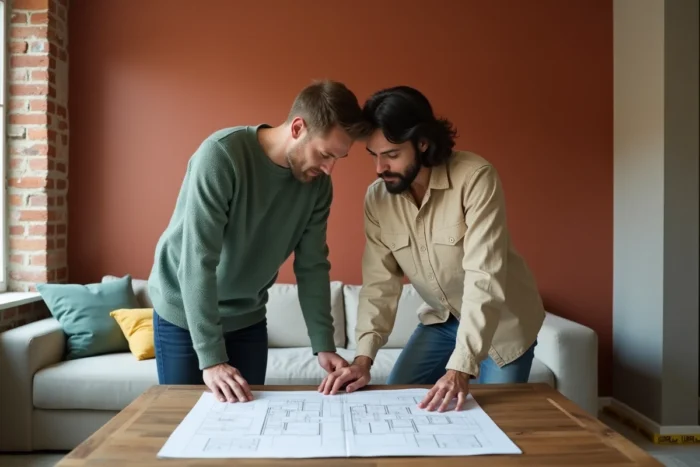
Interior layout gains more fluidity by removing obstacles than by adding furniture. Before buying anything, we recommend mapping the flow of movement in each room. A hallway cluttered with a console, a living room crossed diagonally to reach the kitchen: these daily frictions can be resolved by repositioning existing furniture.
Vertical storage remains underutilized in most homes. Wall shelves from floor to ceiling free up floor space while significantly increasing storage capacity. In a bedroom, a bed with integrated storage (drawers or storage box) eliminates the need for an additional dresser.
The kitchen and bathroom offer the biggest optimization gains. An internal drawer in a sink cabinet, magnetic hooks on the side of a refrigerator, a mirror-cabinet in the bathroom: these targeted additions cost little and create immediate visual space. The design of a room depends less on the chosen furniture than on the empty space left around it.
Natural light and lighting: the most underestimated decorative lever
Changing the light in a room transforms its perception more radically than a change in wall color. Two axes produce clear results.
The first concerns the maximization of natural light. Replacing opaque curtains with lightweight linen shades, clearing the immediate surroundings of windows (no tall furniture within 50 cm of an opening), and cleaning windows twice a year are enough to change the ambiance of a living room or bedroom. In windowless rooms, a glass transom above an interior door or a glass door allows light from the hallway to enter without sacrificing privacy.
The second axis focuses on artificial lighting. Multiplying light sources at different heights (wall sconces, reading lamps, indirect lighting under kitchen furniture) creates a depth that a single ceiling light cannot offer. Favoring a color temperature around 2700 K for living spaces ensures a warm atmosphere without turning yellow.
MaPrimeRénov’ and eco-PTZ: financing transformation before decoration
Consumer articles list decorating ideas but often overlook the financing mechanisms that make real foundational work possible. MaPrimeRénov’ and the zero-interest eco-loan now allow for financing insulation, ventilation, and heating system changes, even for modest budgets.
The benefit of these aids is twofold: they reduce the remaining cost for highly energy-efficient projects, and they naturally guide homeowners towards work that increases the property’s value upon resale. Addressing insulation before redecorating a living room may not be spectacular, but it is the logical order that maximizes every euro invested.
The best transformation of a house remains that which improves what is not visible (thermal envelope, air circulation, integrated storage) before what is visible. The visual result naturally follows when the basic comfort is achieved.