We often talk about well-being as a distant goal, while the real challenge lies in the micro-decisions of daily life: the alarm clock ringing too early, lunch eaten in front of a screen, the workout postponed until tomorrow. The well-being trends emerging in 2026 do not offer miracle recipes. They refocus attention on concrete, measurable practices, and above all, sustainable over time to build a balanced life.
Mental Health at Work: What the National Cause 2025 Changes
Mental health has been declared the National Cause in France for the year 2025. The effects are already being felt in companies and communities, with more visible obligations regarding the prevention of psychosocial risks.
Read also : Discover the latest trends to explore fashion and reveal your style
Specifically, we are seeing structured programs emerge: internal helplines, mental health first aid training for managers, adjustments to working hours for cognitively demanding positions. It is no longer a secondary HR topic; it is a compliance issue. For employees, this translates into easier access to psychological consultations, sometimes covered by the employer.
The practical challenge is simple: check what your employer has put in place and use these resources without waiting for a burnout episode. You can also consult lecoindubienetre.fr for news related to recent developments in well-being in France, including professional resources.
You may also like : How to Organize a Festival Committee: Key Steps and Tips for Success
CBD Well-being in France: A Market Professionalizing
The CBD market in France continues to grow in 2026, but the game has changed. Quality controls have tightened: full traceability, verifiable European origin, stricter safety criteria for any product sold. Food ranges (cakes, candies, infused drinks) are declining under regulatory pressure.
The refocus is on oils, flowers, and cosmetics, considered the safest ranges for regular use. A project to integrate CBD into national taxation is even mentioned as part of the finance bill, a sign of gradual institutional recognition.
For consumers, the ground rule is straightforward: prioritize products with an accessible certificate of analysis, mentioning the THC level and the absence of heavy metals. Feedback varies on the perceived effectiveness depending on individuals, but product quality remains the only objectively verifiable criterion before purchase.
Gentle Practices and Breathwork: Adapting Sports to One’s Lifestyle
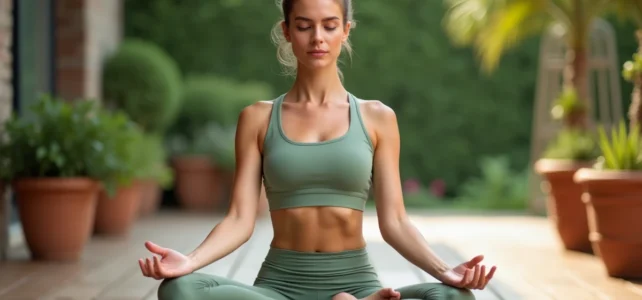
The well-being trends of 2026 confirm a shift towards less intense and more regular sports practices. Breathwork (structured breathing exercises), Pilates, and yoga are no longer niche activities. They can be found in traditional gyms, corporate programs, and even some care pathways.
What distinguishes these disciplines is their physical accessibility. No athletic level is required to start, and the benefits on stress and sleep quality appear fairly quickly when practiced regularly (two to three sessions per week).
- Breathwork combines precise breathing cycles with retention phases. It is used for both daily stress management and recovery after intense effort.
- Pilates targets deep strengthening, particularly the abdominal area and back, making it a good complement to prolonged sedentary work.
- Mobility-oriented yoga is suitable for people who spend more than eight hours sitting, working on the hips, shoulders, and thoracic spine.
The emerging holistic approach is to combine these gentle practices with thermotherapy (sauna, alternating cold baths). Several hotels and wellness centers in France are now incorporating these circuits into their offerings, a sign that demand exceeds the circle of enthusiasts.
Digital Detox and Sleep Rituals: The Duo That Changes Quality of Life
The impact of evening screen time on sleep is often underestimated. Digital detox does not mean eliminating your phone but rather creating a clear break between screen time and bedtime, ideally one hour before sleeping.
The most effective well-being tips on this point are also the simplest:
- Put your phone on airplane mode or leave it outside the bedroom at a fixed time each evening.
- Replace scrolling with a short ritual: reading paper books, gentle stretching, or simply having herbal tea without screens.
- Maintain consistent bedtimes and wake-up times, including on weekends, to stabilize the circadian rhythm.

Regular sleep has more impact on overall balance than a perfect diet. It is often an overlooked lever because it costs nothing and is not sold as a product. Sleep quality conditions stress management, daytime concentration, and even food choices: when we sleep poorly, we compensate with quick sugars and caffeine.
Nutrition and Microbiome: Personalize Rather Than Follow a Diet
Universal diets are losing ground in favor of a more targeted approach centered on the gut microbiome. We now know that digestive health influences mood, immunity, and daily energy levels. The trend in 2026 is no longer to follow a standard meal plan but to adapt one’s diet to personal reactions.
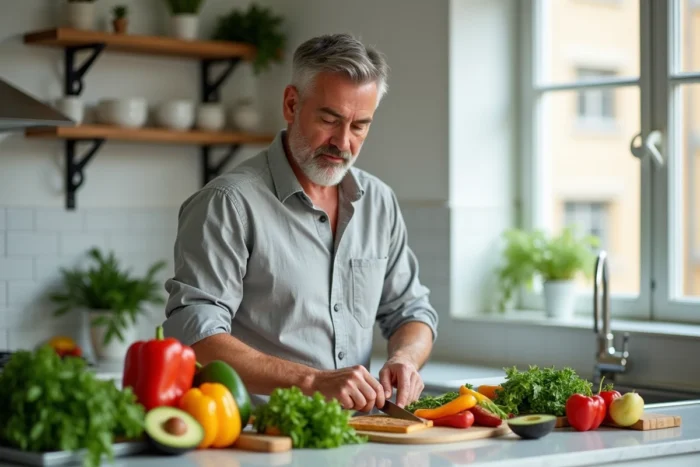
In practice, this involves a few concrete habits: diversifying fiber sources (legumes, whole grains, varied vegetables), integrating fermented foods (yogurt, kefir, sauerkraut), and reducing ultra-processed products that disrupt gut flora.
Sustainable nutrition also comes into play. Consuming local and seasonal products is not just an environmental gesture: it is also a way to find more nutrient-dense products, harvested at maturity. The link between product quality and physical well-being is not theoretical when comparing the energy felt after a meal made of fresh foods and an industrial meal equivalent in calories.
The well-being trends of 2026 converge on the same observation: sustainable changes come from modest but regular adjustments. Modifying a single sleep habit, testing a breathing practice twice a week, checking the traceability of a CBD product before purchasing it. It is these precise actions, repeated over time, that build a balanced lifestyle.